by Danny Eley | Jan 5, 2026 | Fatherhood, Front Page, Growth, Leadership, Manhood
A Birthday Is More Than a Celebration
Birthdays mark time, but for a father, they also mark responsibility.
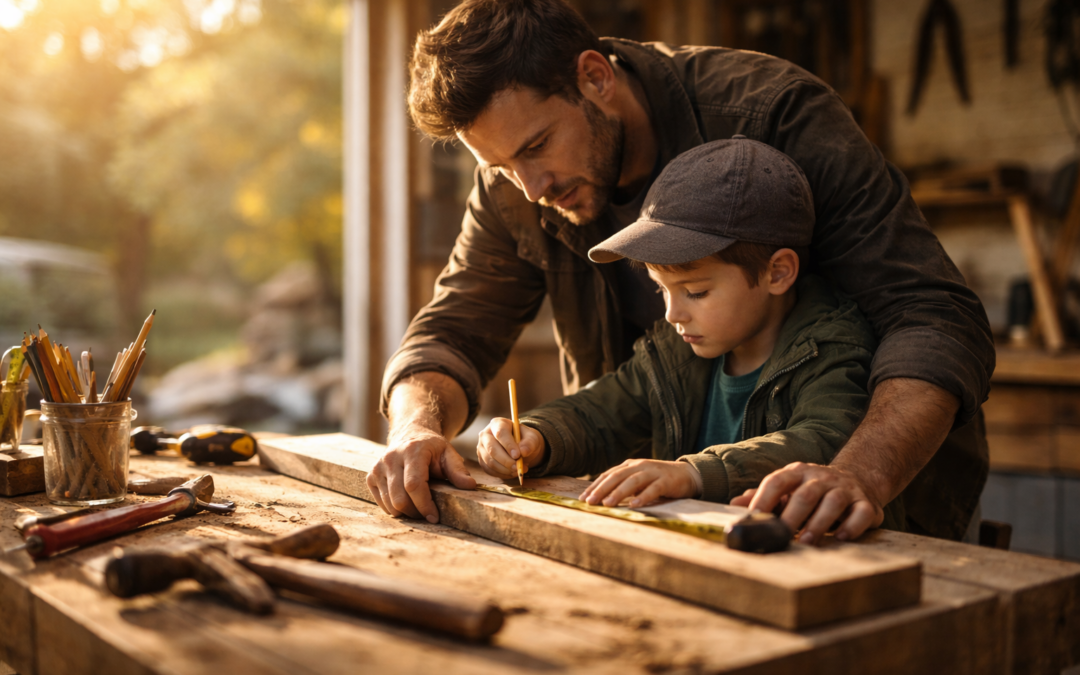
As my son Daniel turns four, I’m reminded that childhood moves fast. What feels small now will one day shape how he stands, how he speaks, and how he carries himself in the world. Long before he understands advice or remembers conversations, he’s learning through observation.
That truth carries weight.
Fatherhood isn’t just about providing or protecting. It’s about forming. It’s about understanding that the man I am becoming is teaching my son who he can become.
I can’t control the world he’ll grow up in—but I can control what I model for him inside our home.
These are four lessons I want him to learn early. Not through lectures, but through how I live.
Lesson One: Strength Is for Serving, Not Showing Off
The world will eventually tell my son that strength is about dominance, volume, and attention. But real strength is quieter than that.
Strength is restraint.
Strength is patience.
Strength is the ability to protect without intimidating and to lead without forcing.
I want my son to grow up understanding that strength exists to serve—to help others feel safe, not small. That strength isn’t proven by how hard you hit, but by how well you carry responsibility.
If I want him to believe that, I have to live it. In how I speak. In how I react under stress. In how I treat his mother and the people around us.
Boys don’t learn strength from words. They learn it from watching their fathers handle pressure.
Lesson Two: Your Word Matters
Promises mean nothing if they aren’t kept.
I want my son to grow up in a world where a man’s word still carries weight—where honesty isn’t optional and integrity isn’t situational. That starts at home.
If I say I’ll show up, I show up.
If I make a commitment, I honor it.
If I make a mistake, I own it.
These moments may seem small now, but they form a pattern. Over time, that pattern becomes character.
One day, my son will be trusted—or doubted—based on whether his word aligns with his actions. I want him to learn early that credibility is built slowly and lost quickly.
And that lesson begins with me.
Lesson Three: Discipline Is an Act of Love
Discipline gets misunderstood.
It isn’t harshness. It isn’t control. And it certainly isn’t anger. Discipline is love with boundaries. It’s guidance when comfort would be easier.
I want my son to learn that discipline exists to help him grow, not to limit him. That structure creates freedom. That self-control leads to confidence.
That means I must discipline with calm, not frustration. With consistency, not emotion. With purpose, not ego.
Children don’t need perfect fathers—but they do need steady ones.
When discipline is done right, it teaches security. It tells a child, “You’re safe here. You’re being guided.”
That’s the environment I want my son to grow up in.
Lesson Four: You Are Responsible for Who You Become
One day, my son will face disappointment, pressure, and adversity. I won’t always be there to shield him. But I can prepare him.
I want him to understand early that while he won’t control everything that happens to him, he will always be responsible for how he responds.
Blame weakens men.
Responsibility strengthens them.
That lesson isn’t taught in a single conversation. It’s taught over years—by watching a father take ownership instead of making excuses.
If I want him to stand firm when life gets hard, I have to model that now.
Fatherhood Is Formation, Not Performance
Being a father isn’t about having all the answers. It’s about being willing to grow alongside your child.
My son doesn’t need me to be impressive. He needs me to be present. He needs consistency more than intensity. Direction more than perfection.
Every day, I’m teaching him something—whether I realize it or not.
That reality humbles me. It also sharpens me.
The Challenge to Fathers and Future Fathers
Whether your child is four years old, grown, or not yet born, this challenge applies:
Live in a way worth imitating.
Ask yourself:
- What am I teaching through my reactions?
- What does my discipline communicate?
- What standard am I setting through my habits?
Legacy isn’t built later. It’s built daily.
My hope for my son isn’t that life will be easy—but that he will be strong, steady, and grounded when it isn’t.
And the best way I know to give him that foundation…
is to become the man I want him to learn from.
#BecomingAMan, #FatherhoodMatters, #RaisingBoys, #StrongFathers, #MasculineLeadership, #FamilyLegacy, #IntentionalParenting, #MensIntegrity, #FatherAndSon, #Manhood
by Danny Eley | Jan 2, 2026 | Front Page, Growth, Manhood
Comfort Is the Default—Manhood Is the Choice
Every male grows older. Not every male grows up.
That’s because comfort is automatic, but manhood is intentional. No one drifts into responsibility. No one stumbles into discipline. And no one accidentally becomes a man of integrity.
Boys live by desire. Men live by decision.
This isn’t about age. It’s about direction. There are young men carrying weight with maturity, and older men still avoiding responsibility. The difference isn’t opportunity or background—it’s choice.
Comfort tells a man to take the easy road. Manhood calls him to take the hard one.
The hard road doesn’t feel good at first. It demands discipline before results, sacrifice before reward, and responsibility before recognition. But it’s the only road that produces strength, stability, and legacy.
What Boys Want
Wanting isn’t wrong. Desire is part of being human. The problem is when a man never moves beyond it.
Boys prioritize what feels good now:
- Immediate gratification
- Freedom without responsibility
- Validation without effort
- Pleasure without consequence
Boys ask, “What do I want?”
Men ask, “What’s required of me?”
A boy avoids discomfort. A boy resents accountability. A boy sees responsibility as something that takes from him instead of something that builds him.
Left unchecked, boyhood doesn’t fade—it hardens. It turns into entitlement, passivity, and blame. And eventually, the man wonders why his life feels shallow, unstable, or unfulfilled.
Wanting is natural. Staying there is a choice.
What Men Build
Men don’t live for the moment. They build for the future.
Men build things that last:
- Discipline when no one is forcing them
- Stability for their families
- Character when compromise would be easier
- Habits that support long-term growth
A man understands that strength is forged, not gifted. He accepts weight before he feels ready. He takes responsibility even when it costs him comfort.
Men build because others depend on them. Even before marriage or children, a man who thinks like a builder prepares himself to carry weight.
Building isn’t glamorous. It’s repetitive. It’s quiet. And it’s often unseen.
But over time, what a man builds begins to speak for him.
The Hard Road Is the Only Road That Produces Strength
The easy road promises comfort. The hard road produces capability.
Avoiding difficulty doesn’t protect a man—it weakens him. Every shortcut taken today becomes a limitation tomorrow. Every responsibility avoided now shows up later with interest.
The hard road teaches lessons comfort never can:
- Patience
- Endurance
- Self-control
- Confidence rooted in competence
Pain isn’t punishment. It’s training.
Men who choose the hard road don’t become bitter—they become steady. They don’t break under pressure because pressure is where they were formed.
Integrity is built under strain, not ease.
Five Practical Ways to Move From Wanting to Building
1. Stop Asking What Feels Good—Ask What Needs to Be Done
Discipline begins when desire stops being the decision-maker. Men act on responsibility, not mood.
2. Commit to One Hard Thing and Stay With It
Whether it’s physical training, work ethic, or personal growth—choose one challenge and refuse to quit when it gets uncomfortable.
3. Delay Gratification on Purpose
Practice saying no to yourself. Strength grows every time you choose long-term benefit over short-term pleasure.
4. Build Routines, Not Resolutions
Boys chase motivation. Men build habits. Habits create structure, and structure creates freedom.
5. Accept Accountability
Invite correction. Seek men who hold standards. Growth accelerates when excuses are removed.
The Moment a Man Crosses the Line
There is a moment—sometimes quiet, sometimes painful—when a man realizes his life is his responsibility.
That’s the line between boyhood and manhood.
It’s the shift from:
- “Someone should help me”
to
- “This is on me.”
This mindset change transforms everything. It changes how a man works, how he loves, how he leads, and how he sees himself.
Fatherhood doesn’t start with children. Leadership doesn’t start with a title. Manhood starts when a man governs himself.
Why the World Needs Men Who Build
Strong families require men who accept responsibility. Healthy communities require men who stand firm. The next generation needs examples more than speeches.
When men refuse to grow up, others pay the price.
But when men build—homes stabilize, standards rise, and boys learn what maturity looks like.
Manhood isn’t about dominance. It’s about dependability.
The Challenge: Choose the Hard Road
Here’s the challenge:
Stop asking what you want.
Ask what you’re building.
Ask who benefits from your discipline. Ask what your habits are shaping. Ask whether your life reflects comfort—or commitment.
The hard road won’t always feel rewarding, but it will make you capable. And capable men are needed now more than ever.
Choose the hard road.
Choose responsibility.
Choose to build.
That’s where manhood begins.
#BecomingAMan, #MasculineIntegrity, #ManhoodMatters, #MensGrowth, #Responsibility, #StrongMen, #FatherhoodLeadership, #BuildNotDrift, #DisciplineEqualsFreedom, #MensPurpose
by Danny Eley | Feb 26, 2025 | Fatherhood, Front Page, Growth, Manhood
There are few roles in life as sacred as that of a father. A father is a protector, a provider, a man who carries the weight of his family’s well-being on his shoulders. That responsibility is built into the very fabric of manhood—deeply ingrained, both biologically and spiritually.
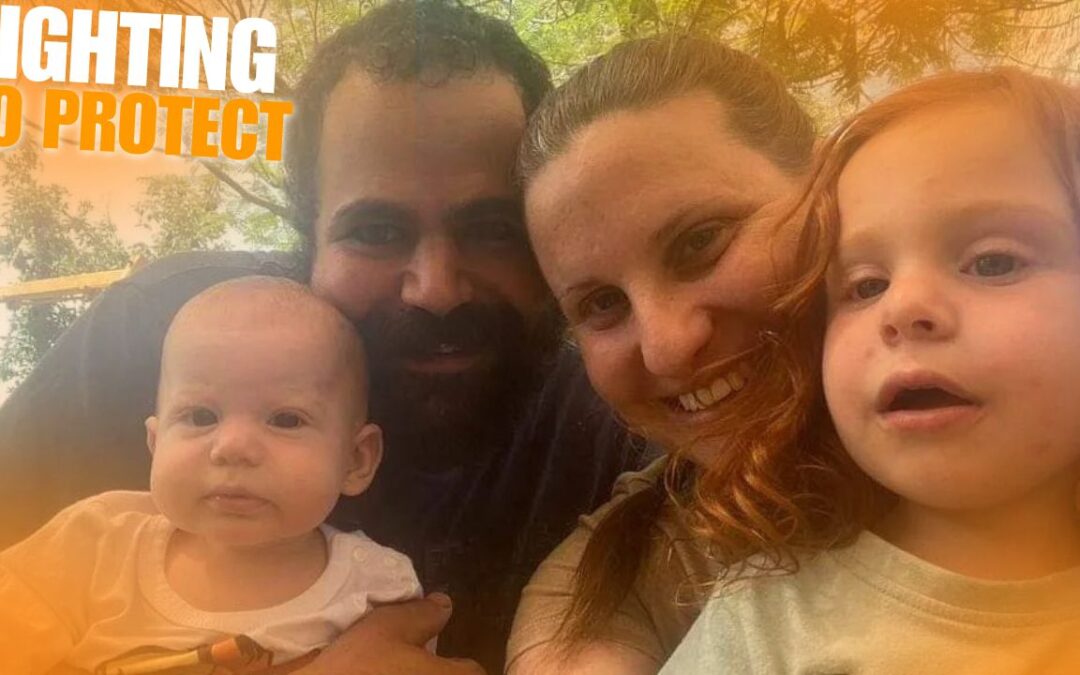
For Yarden Bibas, that sacred role was shattered in the most brutal way imaginable. On October 7, Hamas terrorists stormed into his home, abducting his wife, Shiri, and their two young sons, Ariel and Kfir. In his final moments with them, Yarden had a choice—to fight or to surrender. Shiri told him to fight. He fought. But despite his courage, he was overpowered, taken hostage, and later released—only to learn that his wife and children had been murdered in captivity.
At their funeral, standing before the graves of the people he loved most, Yarden spoke words no father should ever have to say:
“Ariel, I hope you’re not angry with me for failing to protect you properly.”
It is hard to comprehend the weight of those words. The grief of losing a child is already an unbearable pain, but to feel that you failed to protect them—that is a wound that cuts even deeper.
This is a father’s worst nightmare, and for men who understand the burden of responsibility, it is a tragedy that shakes us to our core. A man can endure a great deal of suffering, but the one thing he cannot bear is failing the people he was meant to protect.
The Weight of Responsibility
Every man, whether he realizes it or not, carries this instinct to protect. It’s what drives fathers to work long hours, to sacrifice their own comforts, to stand guard in the middle of the night when they hear an unfamiliar sound in the house. It’s what makes a man step in front of danger without a second thought if his family is at risk.
But what happens when that duty is taken away? What happens when a father does everything he can—when he fights, when he resists—and still, the unthinkable happens?
The truth is, there are times when the world is cruel, when evil wins a battle, and when no amount of strength or courage is enough to stop the horror from unfolding. And yet, men like Yarden are left with a guilt that they should never have to carry.
He fought. He tried. And still, he will wake up every day with the unbearable ache of what if?
The Unbreakable Bond Between Father and Child
Even in the depths of his grief, Yarden spoke about his boys not as lost souls, but as children who still live on in his heart.
“I hope you’re making all the angels laugh with your silly jokes and impressions. I hope there are plenty of butterflies for you to watch, just like you did during our picnics.”
There’s something deeply powerful in the way he speaks to Ariel and Kfir, as if they are still listening. Because for a father, his children are never truly gone.
That bond is eternal. It’s why fathers still hear their children’s laughter long after they’ve grown. It’s why a man will still instinctively reach for his son’s hand, even when that child is no longer a boy, but a man himself. It’s why, even in the darkest moments, Yarden still calls out to them, because in his heart, they are still with him.
What It Means to Be a Protector
At Becoming a Man, we talk about responsibility, leadership, and the role of men as protectors. Yarden’s story forces us to confront the painful reality that sometimes, despite our greatest efforts, we cannot always protect the people we love.
So what do we do with that truth?
We do what Yarden is doing—we keep fighting. We stand strong. We hold our loved ones close. We never stop being protectors, even when the world tells us we’ve failed.
Because manhood is not just about physical strength or standing guard—it’s about love, about sacrifice, about carrying the weight of responsibility even when it feels unbearable.
Yarden Bibas fought for his family. And now, he fights to keep their memory alive. That is the heart of a father. That is the heart of a man.
#Fatherhood, #GriefAndLoss, #ProtectYourFamily, #StrengthThroughPain, #FathersLove, #Manhood, #Responsibility, #NeverForget, #Heartbreak, #FamilyFirst
by Danny Eley | Aug 30, 2024 | Front Page, Manhood
In today’s political landscape, figures like Tim Walz’s vice-presidential candidacy and Doug Emhoff, Kamala Harris’ husband and the nation’s Second Gentleman, are being praised as modern examples of masculinity. But if you take a closer look, you’ll see that these men often reflect the same characteristics seen in the men of 90s sitcoms—amiable, supportive, yet lacking the strength, decisiveness, and leadership that define true manhood. This trend didn’t start today; it’s a continuation of how the media has conditioned us to view men in a certain light. Let’s explore how this conditioning has shaped our understanding of masculinity and why it falls short of what real manhood should represent.
The 90s Sitcom Male: The Goofy, Fake Authority Figure
In many sitcoms of the 90s, male characters were often portrayed as bumbling idiots—men who pretended to have authority but quickly crumbled when the real decision-maker, usually a woman, stepped in. These characters often embodied a fake sense of authority, masking their incompetence with bravado, only to reveal their true lack of capability when faced with real challenges. They were often the source of comic relief, but their portrayal as goofs with no real leadership qualities sent a damaging message about manhood.
This depiction wasn’t just about getting laughs; it conditioned viewers to see men as unreliable leaders, incapable of handling the pressures of family and life without falling apart. When the real boss entered the scene, these men shrank into the background, reinforcing the idea that they were neither needed nor capable of making important decisions. This portrayal undermined the concept of men as strong, responsible figures who could be relied upon to guide their families through tough times.
The Damage Done: Undermining True Masculinity
The damage from these portrayals is deeper than we might think. Young men growing up watching these shows were exposed to a version of masculinity that was both comical and pitiful—men who were meant to lead but were constantly undermined by their own ineptitude. This created a false narrative that being a man meant either being a joke or stepping aside for someone more capable to take charge.
However, true manhood involves more than just pretending to be in control. It’s about real leadership—embracing responsibility and understanding that the success or failure of the family often rides on the man’s shoulders, regardless of whether he is making every decision. While it’s important to recognize that not all decisions should be made by the man, and that a healthy partnership is built on mutual respect and shared responsibilities, it’s also crucial to understand the unique role that men play in the success of their families.
Partnership and Responsibility: The Balance of True Masculinity
Support and partnership are key components of a healthy relationship, but it’s essential that these elements are grounded in a clear understanding of roles and responsibilities. In a strong partnership, the man doesn’t always have to be the one making decisions, but he must be a reliable and capable leader when it counts. The idea that men should simply step back and let others take charge diminishes their role and ultimately weakens the foundation of the family.
A true partnership understands that both parties bring unique strengths to the table, and while the man may not make every decision, his presence as a strong, dependable figure is vital. The success or failure of a family often depends on the man’s ability to lead with integrity, strength, and compassion. When men are reduced to the role of the goofy, ineffective partner, the entire dynamic suffers, and the real responsibilities that come with manhood are undermined.
Reclaiming Masculinity: Moving Beyond the Stereotypes
As we reflect on how media has shaped our understanding of masculinity, it’s clear that it’s time to move beyond these outdated stereotypes. True manhood isn’t about pretending to be in charge or playing the fool; it’s about embracing the responsibilities that come with being a man. This includes being a supportive partner, but also stepping up when leadership is required and understanding that your role in the family’s success is crucial.
We need to challenge the narratives that have conditioned us to accept a watered-down version of masculinity and instead strive to embody the full spectrum of masculine virtues. This means embracing courage, integrity, and leadership, while also being emotionally balanced and supportive.
Let’s look for role models who demonstrate these virtues, whether in our personal lives or in the media we consume, and strive to be the best versions of ourselves. The next generation deserves better than the weak, go-along masculinity of sitcoms and the public figures who follow in their footsteps.
Challenge:
I challenge you to reconsider the media you consume and the male role models you look up to. Are these figures inspiring you to be strong, responsible, and decisive, or are they reinforcing a limited and passive view of manhood? It’s time to take control of your narrative and redefine what it means to be a man in today’s world. Don’t let the conditioning of the past dictate your future. Instead, embrace the qualities that make for true manhood and show the world what it really means to be a man.
ModernMasculinity, #TrueManhood, #RedefiningRoles, #MediaInfluence, #MaleRoleModels, #MasculinityMatters, #PoliticalMasculinity, #BecomingAMan, #Leadership, #MasculineVirtues
by Danny Eley | Oct 31, 2023 | Brotherhood, Faith, Fatherhood, Front Page, Growth, Integrity, Manhood
Inspired by “How to be a Man” by Dax feat. Darius Rucker
I find myself living in a world that’s teetering on the edge. There’s chaos in every headline—economic downturns, global unrest, and wars brewing on the horizon. But that external noise often drowns out the personal chaos many of us are wrestling with inside our own four walls. I feel this deeply. My role as the sole provider has never been more daunting, particularly as my wife has taken on the full-time job of raising our children. It’s a role I’m grateful she can fill, but it does add to the weight I’m carrying. And like many of you know, my mom’s been fighting cancer. I wouldn’t be anywhere else but here to support her, but the emotional and spiritual toll is real.
You know that feeling when you’re screaming inside but can’t let it out? Like you’re afraid to add your troubles to someone else’s plate? So you internalize it. That weight becomes a silent scream, heavy enough to crush your spirit but silent enough to go unnoticed.
This is when I lean on God. For me, God isn’t a far-off concept; He’s a real, tangible source of strength. When I’m grappling with the fear and uncertainty that life throws my way, my faith provides solace. It’s not just about knowing God is there; it’s about feeling His presence, especially in those moments when everything else feels unstable.
But let’s make something clear: faith isn’t a solitary journey. I believe in the power of community, of brotherhood. While it’s true we men often feel we have to go it alone, the truth is, we’re stronger together. We have to share our struggles, lend a shoulder, and sometimes even be the shoulder to lean on. It’s not just for our benefit, but for our children, too. I want my sons to grow up understanding that their dad could weather the storm because he wasn’t too proud to seek help, both divine and earthly.
I want them to see that their dad relied on a strong community and an even stronger God to get through the trials life invariably throws our way. The road might be rocky, but if we keep our feet steady and our hearts open, we can navigate through anything. We don’t have to be islands, silently suffering while life’s storms rage around us. We can be anchors for each other, rooted in faith and fortified by brotherhood.
#StrengthInStruggle #UnspokenManhood #FaithAndBrotherhood #NavigatingChaos #SoleProvider #SilentScream #LeanOnGod #StrongerTogether #WeatherTheStorm #RootedInFaith

by Danny Eley | Jul 20, 2023 | Front Page, Manhood
Growing up isn’t a one-time event. It’s a continuous and evolving journey, and one of the most significant transitions a male undergoes is the shift from boyhood to manhood. In the chaos of life and societal expectations, this path can often be obscured and daunting. The hard truth is, becoming a man goes beyond physical maturity. It’s about emotional growth, mental resilience, and forging your moral compass. It’s about learning the true meaning of responsibility, accountability, and respect, not just for others, but for oneself too.
The Road Less Traveled: Recognizing the Journey Ahead
One can’t transform overnight. The metamorphosis from boyhood to manhood is a path laid with trials, triumphs, and lots of learning. It’s a journey where your virtues will be tested and your resilience will be challenged. Society may have painted a glamorous image of manhood with raw strength, grit, and power, but true manhood is much more nuanced. It’s about demonstrating respect, showing vulnerability, understanding emotions, and not shying away from expressing them.
- Embrace Emotional Maturity: In a world that often equates masculinity with stoicism, breaking away from this stereotype requires courage. Emotions aren’t a sign of weakness; they’re a reflection of your humanity. Real men do feel, and they aren’t afraid to show it. Whether it’s tears of joy or of sorrow, allowing yourself to truly feel and express your emotions is an indicator of emotional maturity. It’s about acknowledging your feelings, understanding them, and expressing them in a healthy and respectful manner. It’s about breaking the shackles of outdated machismo and realizing that strength isn’t about suppressing emotions, but embracing them.
- Acknowledge Responsibility: One of the most significant milestones on the road to manhood is the ability to take responsibility. This means not only taking charge of your actions but also owning up to their consequences. It’s about understanding that every decision you make, every action you take has repercussions that you must stand up to. Whether it’s a mistake you’ve made or a success you’ve earned, taking responsibility is a sign of growing maturity and integrity.
- Respect Others: Respect is a two-way street. If you wish to be respected, you must learn to respect others first. This means treating everyone, regardless of their background, beliefs, or status, with kindness and understanding. It’s about valuing other people’s rights, feelings, and ideas. Every person you meet has their own story, their own struggles, and their own dreams. Recognizing and respecting this is a vital step towards true manhood.
- Self-Care and Health: Manhood isn’t just about mental and emotional growth. Taking care of your physical health is equally important. Regular exercise, balanced nutrition, and adequate sleep are critical components of overall well-being. These habits will not only keep you in good health but also instill discipline and dedication, traits that are integral to your growth as a man.
- Foster Patience and Understanding: Life is a journey, not a sprint. It’s filled with ups and downs, victories and losses, triumphs and mistakes. Understanding that it’s okay to falter, that it’s okay to not have all the answers is a sign of growth. Be patient with yourself and with others. Remember, the path to manhood isn’t about perfection; it’s about growth and learning.
- Find Your Passion: Lastly, part of growing up is discovering who you are and what you’re passionate about. This passion, this drive could be the very thing that gives your life direction and purpose. It could be anything from art to business, from sports to science. Find what sets your soul on fire, and embrace it. Your passion could become your roadmap, guiding you on your journey to manhood.
The Final Ascent: Claiming Your Manhood
The shift from boyhood to manhood is a journey filled with challenges and discoveries. Embracing these steps won’t necessarily make the journey easier, but it will definitely make it more rewarding. Remember, becoming a man isn’t a destination; it’s a continuous journey of growth, learning, and self-discovery.
Crossing the threshold from boyhood to manhood isn’t marked by a grand ceremony or an age milestone. It’s a personal journey, unique to every individual. It’s a journey where you grow, evolve, and transform at your own pace. The most significant marker of this transition is perhaps when you start embodying the traits of responsibility, respect, and emotional maturity, when you start living by your virtues and standing by your principles.
The shift from boyhood to manhood can be a turbulent, uncertain journey, but with the right guidance and perseverance, it is a rewarding and transformative one. Remember, becoming a man isn’t about fitting into society’s rigid boxes. It’s about becoming the best version of yourself, standing tall in your truth, and leading a life of respect, responsibility, and love.
#Manhood #Maturity #Responsibility #Respect #Health #Patience #Understanding #Passion #Growth #BoyhoodToManhood